
Why the “Running Backs Don’t Matter” Narrative Is Wrong

For the past few years, one phrase has dominated football discourse:

“Running backs don’t matter.”

Contracts shrink. Draft value drops. Veteran backs get released earlier than ever. And analytically speaking, there is some logic behind the argument.

But here’s the truth most discussions miss:

👉 Running backs do matter — just not in the way they used to.

And the teams that understand this nuance are the ones winning consistently in today’s National Football League.

Where the “Running Backs Don’t Matter” Argument Comes From

The argument isn’t made up. It’s based on real trends:

Passing is more efficient than rushing Offensive lines create more value than individual runners Running back performance declines earlier than other positions You can often get 80% of the production for 20% of the cost

From a pure cap-efficiency standpoint, it makes sense why teams hesitate to invest heavily.

But football is not played on spreadsheets alone.

What the Analytics Crowd Gets Right

Let’s be fair — analytics have improved the game.

They correctly show that:

Elite quarterbacks drive wins more than elite running backs Scheme matters more than raw rushing totals Overpaying aging running backs can cripple a roster

Teams that blindly pay for past production often regret it.

So no — this isn’t a defense of massive, long-term running back contracts.

Where the Narrative Falls Apart

Here’s where the “RBs don’t matter” take goes too far.

1. Running Backs Dictate Defensive Behavior

Defenses still have to:

Load the box Respect play-action Assign extra eyes in pass protection

A credible run threat changes how defenses align, even if the offense is pass-heavy.

That leverage doesn’t show up cleanly in box scores.

2. They’re the Engine of Offensive Identity

Great offenses aren’t just efficient — they’re uncomfortable to defend.

Running backs:

Control tempo Wear down defensive fronts Keep pass rushers honest

In big games, when spacing tightens and weather worsens, the ability to run with intent still matters.

3. Modern RB Value Is About Versatility

The old bell-cow model is mostly gone. Today’s value comes from backs who can:

Catch out of the backfield Pass protect Line up wide Create mismatches in space

These players aren’t just runners — they’re offensive multipliers.

That matters.

The Real Problem Isn’t the Position — It’s the Contract Structure

Most teams don’t fail because they value running backs.

They fail because they:

Pay for past production Ignore usage decline curves Backload guarantees Overcommit years instead of touches

Smart teams:

Draft well Rotate efficiently Extend selectively Let emotion-free decisions win

Running backs aren’t disposable — bad contracts are.

Why Fans Feel the Disconnect

Fans see:

Star players released Big moments made by elite backs “Cheap replacement” arguments online

What they don’t see:

Cap constraints Injury probability curves Roster opportunity cost

The truth lives in the middle.

The Correct Take: Running Backs Matter Situationally

Running backs matter when:

Your offense is built around balance Your quarterback benefits from play-action You’re protecting leads You’re playing in cold-weather or playoff football

They matter less when:

You’re paying for name value Your line can’t block Your offense lacks identity

Context matters more than ideology.

Final Verdict

Running backs don’t need to be the highest-paid players on the field.

But saying they don’t matter at all?

That’s lazy analysis.

The smartest teams in the NFL don’t ignore running backs — they optimize them.

And that’s the difference between trends and truth.

What’s Next

Why elite offensive lines matter more than skill players How teams actually evaluate RB draft value The hidden link between play-action and RB efficiency
How the NFL Salary Cap Works (Explained Simply)

If you’ve ever wondered why your favorite NFL team can’t just sign every star player, the answer usually comes down to one thing: the salary cap.

The NFL salary cap is designed to keep the league competitive, prevent big-market teams from buying championships, and force front offices to make tough decisions. But while it sounds complicated, the basics are actually pretty easy to understand.

Let’s break it down—simply.

What Is the NFL Salary Cap?

The NFL salary cap is the maximum amount of money each team is allowed to spend on player salaries in a single season.

Every team gets the same cap limit It applies to active players, injured reserve, and dead money Teams cannot exceed the cap (with limited exceptions)

The cap is negotiated between the league and the players’ union through the NFL Players Association (NFLPA) and is tied directly to league revenue.

Why Does the NFL Have a Salary Cap?

The cap exists for three main reasons:

1. Competitive Balance

Without a cap, richer teams could simply outspend everyone else. The NFL wants the smallest-market team to have the same chance to win as the biggest.

2. Cost Control

Owners get predictable spending limits, while players are guaranteed a share of league revenue.

3. League Parity

This is why worst-to-first turnarounds happen so often in the NFL compared to other leagues.

How Is the Salary Cap Calculated?

Each year, the cap is based on:

Total NFL revenue (TV deals, sponsorships, tickets, streaming) A negotiated percentage paid to players Adjustments from previous seasons

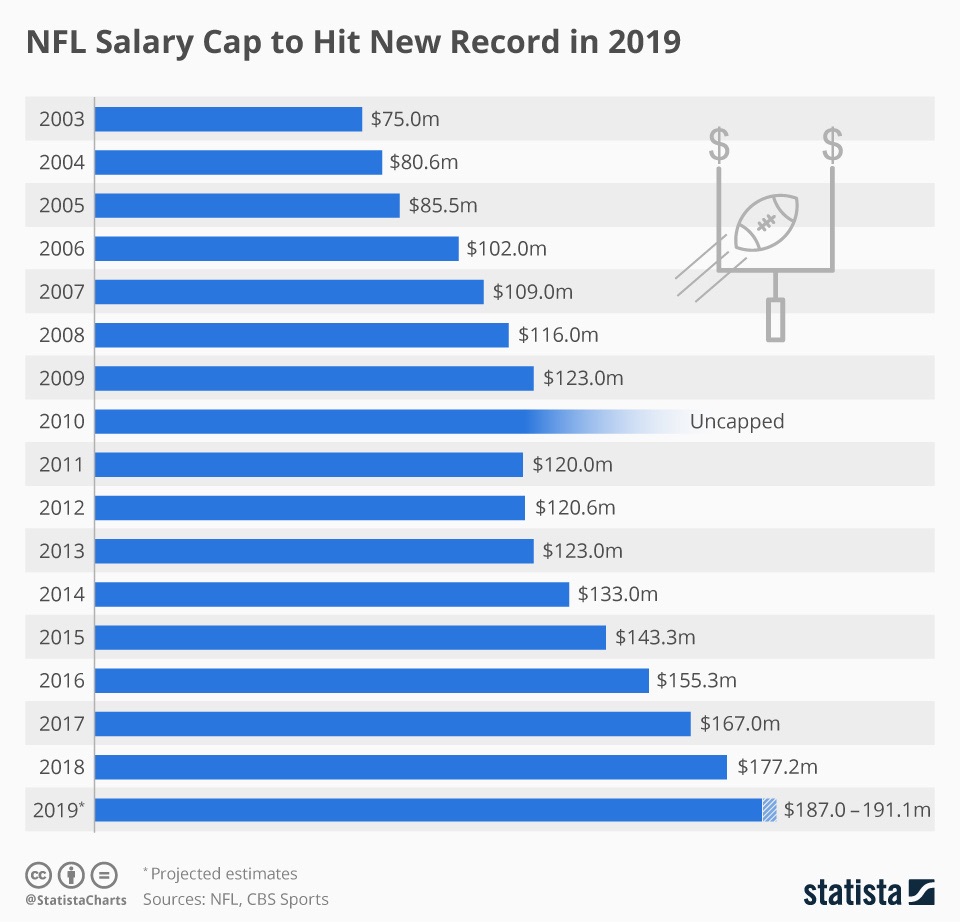
For example, the 2024 NFL salary cap was set at $255.4 million per team, a significant jump due to increased media revenue.

📈 Key takeaway: When the NFL makes more money, the cap goes up.

What Counts Against the Salary Cap?

This is where fans often get confused.

A player’s cap hit is not always the same as their cash salary.

Cap hits can include:

Base salary Signing bonuses (spread out over multiple years) Roster bonuses Workout bonuses Incentives (some count, some don’t)

Signing Bonuses (The Cap “Trick” Teams Use)

When a player signs a contract, they often receive a signing bonus paid immediately in cash.

But for cap purposes:

That bonus is spread evenly over the length of the contract Up to 5 years maximum

Example:

A player signs a 5-year deal with a $25 million signing bonus.

Cash paid immediately: $25M Cap hit per year: $5M

This is how teams create short-term flexibility while pushing cap hits into future seasons.

What Is “Dead Money”?

Dead money is cap space taken up by players who are no longer on the team.

This usually happens when:

A player is cut A player is traded Guaranteed money accelerates onto the cap

Dead money hurts because:

You’re paying for players not contributing It limits your ability to sign replacements

Smart teams manage dead money carefully. Poor teams let it spiral.

Can Teams Go Over the Salary Cap?

Short answer: No.

Long answer:

Teams can temporarily exceed the cap during the offseason They must be cap-compliant by the start of the league year Violations result in fines, penalties, and voided contracts

The NFL enforces the cap aggressively.

Why Do Teams “Restructure” Contracts?

Restructuring is a legal way to lower a player’s current cap hit by converting salary into bonuses.

Teams do this to:

Create space for free agents Extend competitive windows Delay cap pain (sometimes too long…)

⚠️ Important: Restructures don’t erase money — they push it forward.

Why Fans Should Care About the Salary Cap

Understanding the salary cap helps you:

Make sense of free agency decisions Understand why stars get cut or traded Evaluate front office competence Predict team success over multiple seasons

Winning teams aren’t just built on talent — they’re built on cap management.

Final Thoughts

The NFL salary cap isn’t just accounting — it’s strategy.

Teams that master it stay competitive. Teams that ignore it end up rebuilding.

Once you understand the basics, watching roster moves, extensions, and free agency becomes way more interesting.

Coming Next

How NFL contracts really work Why some incentives count against the cap (and others don’t) Best and worst cap situations in the league

Design a site like this with WordPress.com
Get started