If you’ve ever wondered why your favorite NFL team can’t just sign every star player, the answer usually comes down to one thing: the salary cap.
The NFL salary cap is designed to keep the league competitive, prevent big-market teams from buying championships, and force front offices to make tough decisions. But while it sounds complicated, the basics are actually pretty easy to understand.
Let’s break it down—simply.
What Is the NFL Salary Cap?
The NFL salary cap is the maximum amount of money each team is allowed to spend on player salaries in a single season.
Every team gets the same cap limit It applies to active players, injured reserve, and dead money Teams cannot exceed the cap (with limited exceptions)
The cap is negotiated between the league and the players’ union through the NFL Players Association (NFLPA) and is tied directly to league revenue.
Why Does the NFL Have a Salary Cap?
The cap exists for three main reasons:
1. Competitive Balance
Without a cap, richer teams could simply outspend everyone else. The NFL wants the smallest-market team to have the same chance to win as the biggest.
2. Cost Control
Owners get predictable spending limits, while players are guaranteed a share of league revenue.
3. League Parity
This is why worst-to-first turnarounds happen so often in the NFL compared to other leagues.
How Is the Salary Cap Calculated?
Each year, the cap is based on:
Total NFL revenue (TV deals, sponsorships, tickets, streaming) A negotiated percentage paid to players Adjustments from previous seasons
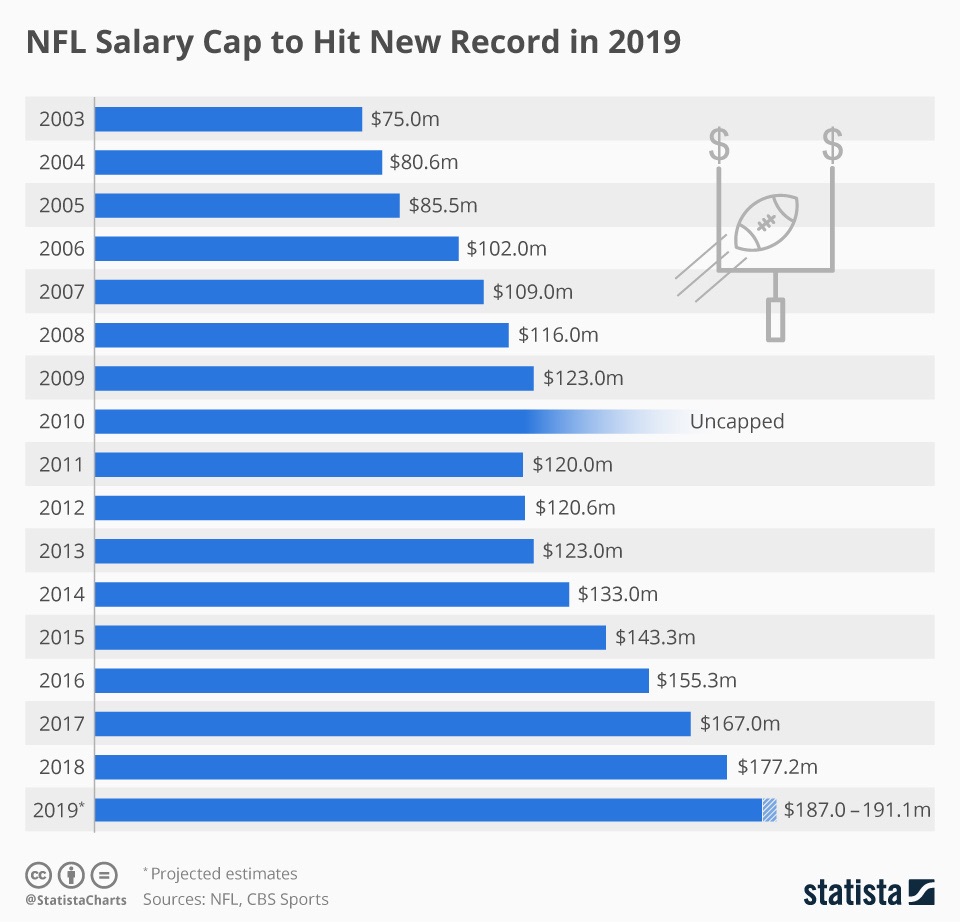
For example, the 2024 NFL salary cap was set at $255.4 million per team, a significant jump due to increased media revenue.
📈 Key takeaway: When the NFL makes more money, the cap goes up.
What Counts Against the Salary Cap?
This is where fans often get confused.
A player’s cap hit is not always the same as their cash salary.
Cap hits can include:
Base salary Signing bonuses (spread out over multiple years) Roster bonuses Workout bonuses Incentives (some count, some don’t)
Signing Bonuses (The Cap “Trick” Teams Use)
When a player signs a contract, they often receive a signing bonus paid immediately in cash.
But for cap purposes:
That bonus is spread evenly over the length of the contract Up to 5 years maximum
Example:
A player signs a 5-year deal with a $25 million signing bonus.
Cash paid immediately: $25M Cap hit per year: $5M
This is how teams create short-term flexibility while pushing cap hits into future seasons.
What Is “Dead Money”?
Dead money is cap space taken up by players who are no longer on the team.
This usually happens when:
A player is cut A player is traded Guaranteed money accelerates onto the cap
Dead money hurts because:
You’re paying for players not contributing It limits your ability to sign replacements
Smart teams manage dead money carefully. Poor teams let it spiral.
Can Teams Go Over the Salary Cap?
Short answer: No.
Long answer:
Teams can temporarily exceed the cap during the offseason They must be cap-compliant by the start of the league year Violations result in fines, penalties, and voided contracts
The NFL enforces the cap aggressively.
Why Do Teams “Restructure” Contracts?
Restructuring is a legal way to lower a player’s current cap hit by converting salary into bonuses.
Teams do this to:
Create space for free agents Extend competitive windows Delay cap pain (sometimes too long…)
⚠️ Important: Restructures don’t erase money — they push it forward.
Why Fans Should Care About the Salary Cap
Understanding the salary cap helps you:
Make sense of free agency decisions Understand why stars get cut or traded Evaluate front office competence Predict team success over multiple seasons
Winning teams aren’t just built on talent — they’re built on cap management.
Final Thoughts
The NFL salary cap isn’t just accounting — it’s strategy.
Teams that master it stay competitive. Teams that ignore it end up rebuilding.
Once you understand the basics, watching roster moves, extensions, and free agency becomes way more interesting.
Coming Next
How NFL contracts really work Why some incentives count against the cap (and others don’t) Best and worst cap situations in the league
 SportWireX